


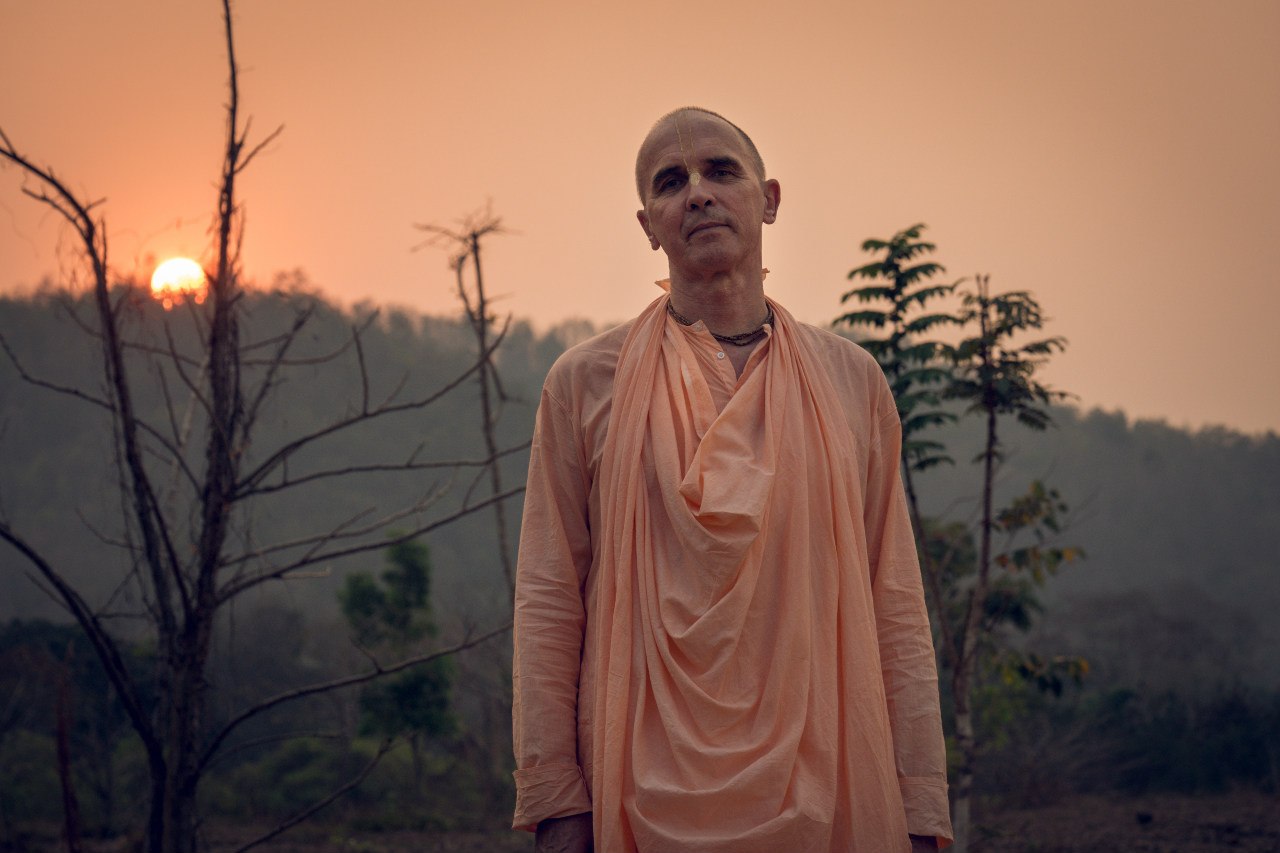
“Substantial things we need. Worldwide family of devotees. Umbrella of seva.” Sripad Keshavananda Prabhu. 8 February 2017. Gupta Govardhan
Аудио
Слушайте с канала "Universal Wave" на Фейсбуке
или
напрямую в вашем любимом плеере
(когда нет эфира, на канале звучат лекции наших учителей)

English
Sripad Keshavananda Prabhu
Substantial things we need.
Worldwide family of devotees.
Umbrella of seva
(8 February 2017. Gupta Govardhan)
Nityananda Prabhu. Okay, we have a special guest, Sri Keshavananda Prabhu from Vrindavan Dham, and our dear devotees have several questions. We will have one-hour talk, which will end by 8.45 p.m. So, six or six and a half questions we have. So, if it is possible, just brief answers each. So, first will be, how did you meet Srila Gurudev? And, oh, by the way, I will postpone that question. Today is the appearance day of Varahadev. So, when we know about that famous story that happened in our Math in Nabadwip with Shalagram-shila, Varahadev, Shalagram-shila, would you be so kind to tell us a little bit from those pastimes of our great Param-gurus?
Keshavananda Prabhu. Yes, I can try, with their blessings, can try to say something of the glories of Lord Varahadev and how he came home, you can say, came home to Koladwip, which is his dwip, his place. Guru Maharaj is saying, Kola is meaning Varaha, this amazing, wondrous, bore incarnation. The infinite wonder of wonders deciding to play as a bore. And astounding, Lord Brahma and the sages. So, some Shalagram, some shila was going around, I heard. He was going around, he’d been worshipped in different places, temples, houses by different devotees and had caused some problems in many places. He was very powerful. Generally, Shalagram-shilas, in our particular fine line, we are bowing our heads to them and not engaging in their direct service.
#00:02:34#
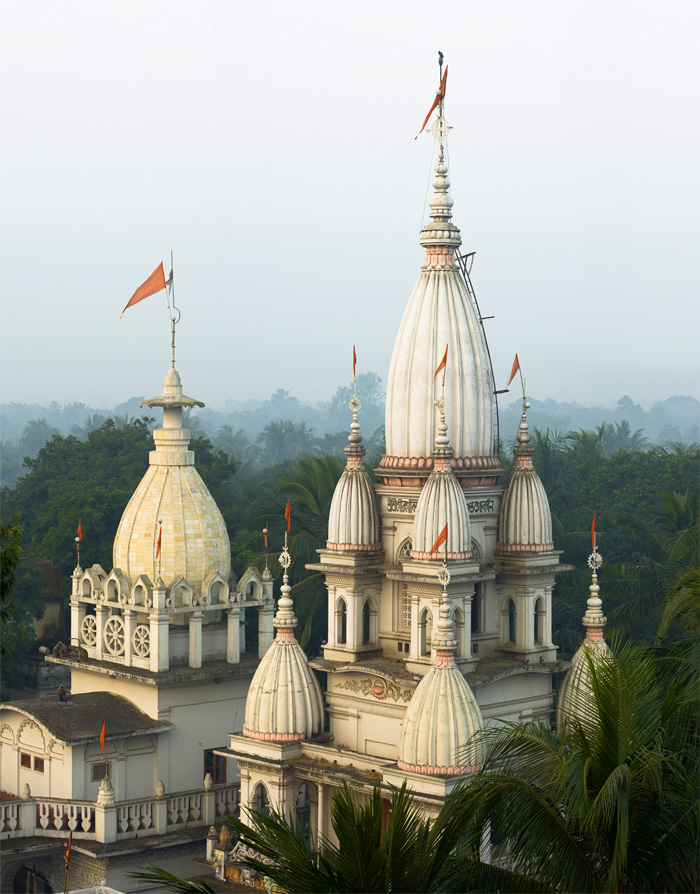
We are taking shelter of the all-merciful, sweet and affectionate Giriraj. He is our Lord and Master and His affectionate shelter is keeping us safe. Shalagram-shila is a different manifestation of the Lord with some different necessities. So, this Shalagram-shila had been kind of passed around and difficulties come into those who began his worship and eventually came to Nabadwip and to Guru Maharaj. And Guru Maharaj was very interested in who this is, who is this personality, who is making disturbance in these places that they cannot continue, they have to give somewhere else. And he asked Shrila Govinda Maharaj to look in the Garuda Purana to find who is this personality. All the different markings are there and different signs on the shila of who is this person. And Gurudev dutifully did that and came saying, “This [is] looks, we think this is Lakshmi Varaha. It’s a Shalagram of Varahadev.” And then with Guru Maharaj’s deep laser vision into reality, he is concurring with that saying, “Yes, this is Varahadev. And He has come to His own place, Koladwip in Navadwip Dham.” And his instruction was that—this Shalagram should be worshipped by a brahmin, brahmachari, saffron brahmachari, every day. That worship should go on and he should be offered sweet rice every day. And to this day, that is going on. And happily, we are, happily in Sri Chaitanya Saraswat math, Nabadwip Dham, where Lord Varahadev has kindly came to His home. And we hope residing very happily there. Maybe there’s more stories, I don’t know so much. But it’s a very wonderful, wonderful pastime because he can. Why does Lord appear as a boar and fish and so many things? Because He can. Why not?
#00:05:24#
And wondrous to behold and beautiful to behold. Stupendous to behold, these amazing pastimes. Jaw-dropping, even the great sages, Bhrigu and Brahma and so many. Jaw-dropping, wondrous astonishment at such a play of the Lord. So, on this day, He came to Sri Chaitanya Saraswat Math.
Nityananda Prabhu. Thank you so much. And the question that I’ve postponed. How did you meet Srila Gurudev? And what was your impression? How did you get initiation?
Keshavananda Prabhu. Well, I met Srila Gurudev through the mercy of his devotees.
#00:06:26#
vāñchā-kalpatarubhyaś cha kṛpā-sindhubhya eva cha
patitānāṁ pāvanebhyo vaiṣṇavebhyo namo namaḥ[1]
The devotees are like desire trees. They give us everything. First the devotees, giving everything. So, through the mercy of the devotees, I was led to the beautiful lotus feet of Srila Gurudev. I had been here and there, many places. Also, been in India, but not met the devotees. And then met the devotees in another place. And through their affection, because I was not an easy person, but through their sweet and gentle natures, they brought me to him, physically brought me to him. Crossed the river Ganga and up the stairs to his old veranda in Nabadwip. And so many years later to this day, I am still my understanding or my relationship of who Gurudev is, who is Sri Guru, is still growing. Still very small, but he’s growing as life continues. So, I was quite young. I mean, Gurudev is beautiful. He’s a beautiful gentleman Vaishnava. Everybody loved him. Everybody loved him, like with Guru Maharaj also. This party, that party, opposition party, everybody loves him. He had that quality of heart dealings. Heart dealings, straight to the heart. Not interested in these other things he’d ask. To the heart of the person, and heart melting. So, through his devotees, and to this day, now Gurudev, Srila Govinda Maharaj, has departed from our eye vision. And still his mercy is being extended to me and to us all through his surrendered servitors, through his dear associates, through his devotees. So, the Vaishnava first, foremost, and always. I spent some time in Nabadwip, and then visited throughout the years. And I was living in a griha, and had a job, and all those things.
#00:09:40#
But I was not in his inner circle, anything like that. I was one of the regular devotees coming. So, I’m still learning who is Gurudev and his sweetness. The first time I met him, he gave me a sweet. What can I say? I could only have some heart feeling that here is some beautiful person. I didn’t really know anything. And it took me a year before I was initiated. I went away and I came again. But it was all the devotees, the people I was dealing with more intimately, was Siddhanti Maharaj, Janardan Maharaj, and other devotees. They were my daily, who I was closely associating with. And then we’d have darshan with Gurudev in the morning time, the night time. Sometimes more closely, sometimes not so closely. But it wasn’t with him all the time. So even when he was present for me, his mercy came through his devotees. His devotees gave me the eye, something of the eye to appreciate the deepness and the profound nature of Sri Guru. All came from them, even during his. For most people, you know, Gurudev had his own associates, Goswami Maharaj and Bhakti Lalita. But this group was not so big, who stayed with him or travelled with him. It was a small group. Most of the devotees like today are all throughout the world, in so many countries, in so many situations. And some were able to go fairly regularly to India to have his immediate association. And some were not. And even then, it depended on your service. If you had some important service, and it happens sometimes, you had some important service in America or somewhere, and you just decided to go to Nabadwip, Gurudev will ask you, and: “It’s so nice to see you, Prabhu, but why are you here? You were doing something for me, remember?” So always trying to remember that the service connection was all in all to try to fulfill his order externally and internally.
#00:12:36#
So, in a word, the devotees, they are our everything. Everything came to me through them, and now also they are carrying Gurudev in their hearts. And in that way, he is before me still, through those devotees. I can still hear his beautiful transcendental voice through them. And such a nice family and such a big family in so many countries. Now Madhusudan Maharaj now is going to all these places. So many countries, almost non-stop travelling almost for maybe three years now. And he says every place is like home. Home comfort every place. There’s a nice community of devotees going up. They have their ups and downs and their daily problems like we all do. But they’re trying to focus their lives to that upper world and the service of that, those transcendental beautiful lotus feet above us. So still the devotees are everything.
#00:13:57#
Nityananda Prabhu. Thank you. And now we move to next question.
Keshavananda Prabhu. Okay.
Nityananda Prabhu. How did you get, as soon as we mentioned Madhusudan Maharaj, how did you get the seva of welcoming devotees in Vrindavan?
Keshavananda Prabhu. The devotee. Yes. Everything coming through the devotees.
Nityananda Prabhu. What was the story behind that?
Keshavananda Prabhu. The story behind that was my kind of my married (griha) life came to a… ran its natural course and came to an end. So, I’m thinking, well, now I can do anything and go anywhere. What to do? And all the emotional stuff of going through that experience. But I knew Gurudev, his, one of his mottos was ‘wait and see’. Don’t just go running. Don’t give up your position very easily. Wait for some confirmation. Think carefully. And then if the time comes when that is the thing to do, then don’t let anything stop you. Hell, or high water, then move. But not to do that. Just whimsically do that. So, so I was very happily in Salt Lake City. Beautiful devotional community with so many beautiful devotees, just heart-melting devotees. You don’t want to leave them anyway. So, I went to the temple, just a small house there, where Sri Lekha is and Nrisingha Prabhu and Nyasi Maharaj and Sudarshan Prabhu and a whole group of devotees there. And I was just still working and serving in the temple and going on. And then I got an email eventually from Sripad Madhusudan Maharaj saying that he was going, because he was in Vrindavan permanently for several years, and that he was going to start traveling and be out of India. And that a little bird had told him that I was thinking of coming to Vrindavan. And if I could do that, that would be great, at least for those months of Kartik through Gaura-purnima, which are the busier months. But I don’t know who this little bird was, because I had not said anything. I had not put that out. So that was the environment speaking for me through the lotus mouth of our dear friend and teacher, Sripad Madhusudan, Bhakti Ranjan Madhusudan Maharaj. And I’d had some seva previously in Vrindavan, so I’d had some experience of staying there. So, I was very, very happy. Very happy. And still can’t believe it, really. Still can’t really believe it. I mean, it has its trials and tribulations, as does everywhere. But still. Gurudev’s saying, you know, “We’re like flies on the outside of the bottle of honey.” But he says, “But still we are near the honey.”
#00:17:32#
So, I feel a bit like that. And the fly on the outside of the bottle, no doubt, can’t actually taste the honey, but still we are near the honey. And the Dham is very, very merciful. Nabadwip Dham, Ekachakra Dham, a place I still have not had the sukriti or opportunity to visit, as many of you have. And we will be thinking and talking of a lot tomorrow on that blessed day of Nityananda Prabhu’s appearance. But some time spent in Nabadwip, and time spent in Vrindavan Dham, then the Dham is very, even from my fallen lamentable condition, can understand something of the softness and sweetness of the holy Dham. Merciful. And pushing us and encouraging us to find that Dham. Inside, you know, inside. So, wherever we go, when we see, when we see that we are surrounded by friends, Guru Maharaj is saying, when we see we are surrounded by friends and friendly waves, then we’ve discovered Vrindavan inside. This plane of consciousness called Vrindavan. Nabadwip. So, so we’re getting so much nourishment from that. And from the devotees. It’s very different again, most of the time it’s where, Gurudev would say, “I have no manpower. I have no manpower.” He would say, “Person’s power. So many ladies also. I have no person power.” So most of the time in Vrindavan, there’s five or six of us. And quite old, most of us. I’m the young one. Not now. We have a couple of younger people. But, you know, mostly I’m one of the younger ones. Priya Krishna [Didi] is there too. So, she’s young. But, you know, the Bengali servitors are all getting older. And we’re just going on as best we can, through the grace of Gurudev, to try to serve the Deities. Our beautiful Sri Sri Guru-Gauranga Gandharva-Rasa-Bihari-jiu. And murti of Srila Guru Maharaj’s pushpa-samadhi murti there. His place in Seva-kunj. So, trying to worship the Deity. Offer prasadam. Keep the place clean. Going on. And then, suddenly on the 25th of February coming up, suddenly the place will be full of Russians. And maybe Brazilians. And Hrishikesh Maharaj is coming. And Prithu Prabhu is coming. Maybe Trivikram Maharaj is coming. And then Goswami Maharaj comes in Kartik time generally. Avadhut Maharaj can pop up at any moment, as we know.
#00:20:52#
And then a whole extra dimension of sweetness comes with the devotees. When the place is full of devotees, then really everything becomes alive and fully nourishing. So, there’s quite an extreme of experience there, from very quiet, practically alone, to the craziness of where we’re going to put everybody, how many people can we put on the floor in this room. And it’s like that. And everybody who’s been knows how the situation is when you go on pilgrimage to India. And we’re quite relatively small. Nabadwip is a big area, many buildings. Pandals get put up at the festival times for devotees to stay in. But Vrindavan, we’re a little more cramped, you could say. Transcendentally cramped. In the middle, in the very heart, our neighbors are. The Radha-Damodara temple. And really, they are our neighbors. Like they bring us half a pot of kichri, they’ve got extra, or some curds, that kind of relationship. Next door neighbors. This is the inconceivable service fortune that’s come from Guru-varga, beloved guardians, have given us this opportunity. So, to the devotees, again, in a one-word answer. Who was always, Sripad Madhusudan Maharaj was always that person? He was the Gurudev’s secretary, western secretary. When I first went to the Math, I arrived kind of late, almost like a Russian. Arrived kind of late, 11 o’clock, and I’m banging on the gate. And it was Mahananda [Prabhu] who let me in from the very first time. And then, you know, basically he was our service connection. “Gurudev would direct you to him. How can I be of service for you?” And he would assign you or ask you to go somewhere with some group, some kind of service. So that was my fortunate, that was my fortune, to have been trying to do that service in a way that Madhusudan Maharaj and Gurudev would be happy with.
Nityananda Prabhu. Thank you again. I know that kirtan takes special part in your life, kirtan. So, what is kirtan for you? And which songs are your favorite?
#00:24:03#
Keshavananda Prabhu. Hare Krishna. The song book is a very dangerous book, no doubt. Sri Gaudiya Gitanjali is a very dangerous book because you sing one song and then you flip the page and you think, “Oh,” then you want to sing that song. And then you see another song and you want to sing that song. And for the last, you know, anyway, for a large chunk of years, 15, 16, 17 years, I was in the USA. And most of that time, I was with Sudarshan [Prabhu], Nitai Prabhu, Rai Kishori [Didi], some real kirtaniyas, you could say. And I became infused with that. And also, in Nabadwip too. In Nabadwip, hearing Bhudeva’s voice soaring through the ether in the evening, which is a magical, just magical memory. I remember coming back to Kolkata, Dum Dum Park, one evening I’d been collecting in Kolkata with another devotee. You know, not very successfully. All day in the street, in the dirt of Kolkata, going around offices, going around shops, coming back with a few rupees, dirty, you know, it’s inside your nose and your ears, everything’s black, you’re just black after a day in Kolkata. And coming down the road and could hear someone singing, probably Bhudeva, he was the singer at the time, the pujari. It was like coming to Goloka, in this dirty metropolis of noise and heat and hustle. This boy singing Sri Guru Charana-padma, whatever he was singing, was another strong memory.
#00:26:13#
And as you might have noticed, I’m not a scholar, really. I mean, I should give more effort to that, no doubt. You know, I could do better. But the songs are so beautiful to begin with, poetry. I mean, the land of Vrindavan is that land where every word is a song and every step is dancing. So, the songbook, and particularly the songs of Narottam Das Thakur and Bhaktivinod Thakur are just the perfect prayers. If you want to pray, pray. This is how to pray. This is to pray for the right thing, in the right mood, that way. And Gurudev says, I think, different places in the preface at the beginning of the more recently published Sharanagati that Tyagi Maharaj made, that if everything else disappeared, everything else disappeared. That means Bhagavad-gita. That means Srimad-Bhagavatam. Everything else means Chaitanya-charitamrita. If everything else disappears, but the songs of Bhaktivinoda Thakur remain, still we have everything. That’s a big, bold statement to say in this one book. So, everything is there, and all the kind of moods of the heart are expressed there. There’s joyous songs of Hari Haraye Namaḥ Kṛṣṇa Yadāvāya Namaḥ. And there’s those songs of separation and feeling bereft, feeling empty, feeling: “I have truly nothing. Can only beg for your grace, O Vaishnav Thakur.”
#00:28:14#
So, and every song is better than every other song. So, it’s like Gurudev would say about: “What is the best preparation on your plate, Maharaj?” The devotees are all cooking their nicest preparations for Gurudev, to offer to Gurudev. “Oh, everyone is better than every other one. The one I am eating is the best one.” So, like that with the songs, really. Like that with the songs. And the songs, I think, give us some association with those personalities who write in those songs like Narottam Das and Bhaktivinoda Thakur. And we hear about their pastimes, and we can understand something of their transcendental nature by hearing about them and singing their beautiful songs. So, it’s a very wonderful part of our spiritual lives, these songs, not to be neglected. And it’s all heart. Really, it’s not about the tune or anything like that. I can think of devotees over the years who were extremely sweet, powerful devotees, who did not have the most melodious, you could say, voice. But really, it didn’t matter. When they chanted in kirtan, you could feel it. You could feel it from there. It was a heart expression. So that’s very important to remember. So, we mustn’t feel shy to try to make that offering of ourselves, to try to pray those prayers sincerely, try to worship that mood of those devotees. Beautiful, heart-melting. So, I can’t really say favorite song. They’re all my favorites, really.
#00:31:00#
Nityananda Prabhu. Thank you again. But questions are coming and coming. So, we should prioritize our questions. Okay. A question from Achyutananda Prabhu, Kiev. Dear Kesavananda Prabhu, can you please share your thoughts on such subject as beauty is in the eyes of the beholder. How to stop judging people for their imperfections?
Keshavananda Prabhu. My dandavats to you, Achyutananda Prabhu, my dear friend in Kiev, who I traveled with, and he kindly translated for me. Well, Guru Maharaj says that everything we see, everybody we see, everything we see, we have to see in relation to the center, and myself also in relation to the center. And in that way, I can begin to understand how I should move with this event, person, something in my environment. The center is the harmonizing principle. Like we mentioned just previously, when I can see a friend, when I see I am surrounded by friends, whatever the apparent external play, when I see that I’m surrounded by friends and my environment is friendly, then I am entering into Vrindavan. That’s where I’m going, in that direction. It’s not a question of getting on a plane and going to somewhere. This is how we go there, by the grace of the devotees. When I can see like that, then I’m going in that direction. Everything is harmonized through the center. So, and that can be difficult sometime, no doubt, because not only is my ego there in a big way, but other people also, we’re the hospital patients, you can say.
#00:33:34#
And Saraswati Thakur’s, one of his methods was to have the devotees glorify each other, he would say to mine the bright side of that devotee’s qualities and articulate that, meditate on that, and have them also do that, reciprocating like that. This has an effect on us when we’re pushed to do that, especially with devotees. As we also want to be seen, because I am full of imperfections and things, I don’t want people to pay too much attention to. So, we also have to learn how to do that. Because Gurudev is not talking lightly when he says, “The environment is your friend.” It’s prasadam that’s coming to you. If you have the… if we can develop the eyes to see that, in every way it is favorable. It doesn’t matter how it’s dressed up. That’s the vision of the Vaishnava. They’re seeing like that. So that’s one way we can do. List the qualities of those individuals. And still we have to make some judgments as well. Perhaps some people or some places are better association for us than others. We’re always taking guidance from our guardians. There’s always, thankfully through the mercy of Gurudev, there’s always someone more who we respect and love and who we can go to with more experience and say, how this situation, how should I deal with this? What do you think about this? And they will happily and dispassionately tell us, give us some advice how to go on.
#00:35:58#
So sometimes necessary to choose friends wisely, to choose environments wisely. But still, even within that, we’re developing a… we have to develop a radical new way of seeing, actually. And our separate interests, independent spirit has to be dissolved, destroyed, blown apart, wholesale, because it is our enemy. It’s our enemy. We think that with that independence, “I can make some arrangement. I can make some arrangement in this Mayika quarter. And there I shall enjoy nicely.” Not going to happen. Never going to happen. Independence, that kind of independence is our complete enemy. It’s only why we’re praying for sharanagati every day. We sing so many songs from the Bhaktivinoda Thakur’s Sharanagati, is that we have to dance his dance. By joining that dance, then actually all independence comes to us, actually. But it’s an independence of a different nature. It’s independence to serve and move freely in that divine service plane. We’re going to dance our own little dance. Guru Maharaj is saying, we’ll go to enjoy, and we come back with a slap. We go to enjoy, and we come back with a slap. And again, we try, and again, and again, and again, and again, and again. So that’s our prayer every day:
#00:37:44#
…śikhāye śaraṇāgati korohe uttama
kā̐diyā kā̐diyā…[2]
That’s our trouble. We’re not kā̐diyā kā̐diyā. We’re just singing it, “Kā̐diyā kā̐diyā bole, āmi to’ adhama.” It’s like crying. Kā̐diyā kā̐diyā bole. That’s how that song is written. Those songs of bereftness. Feeling utterly hopeless. “And You are my only hope. Not my intelligence. Not what I can create. But I have to step into Your dance.” And then as you like that kind of faith. “You know what’s best for me. I’m part of You. You’re my home.” Children of that soil. Children of the land of nectar. And we’ve been robbed. We’ve been robbed of our own wealth. It’s been taken from us. By bandits.
So, we’ve been given the songs of the Acharyas. The shastras and the devotees who are the medium. Who give us all these things coming from them? So, we have to enter into the… We have to understand what these things are. And why it’s necessary. These aren’t some arbitrary bunch of rules. Or some religious injunctions. This is how reality is. Reality is by itself and for itself. That’s true. It doesn’t matter what religion you are. That’s how it works. It’s not beholden to you or me or anyone else. It’s doing its own thing. And the problem is not with reality. The problem is with how I am. Beauty is in the eye of the beholder. As [Achyutananda] Prabhu said. And really the sadhus are telling us. What is the nature of that? What is its most fundamental essence? Is it power? Is it the power of the energy? No. It’s sweet. Beautiful. Affectionate. Ecstatic. Dancing. That’s what it is. That’s what’s going on. That’s its nature. We’re separated from that. Home, sweet home. Separate from that. Thinking. I’m going to do something over here. And I’ll make it. I won’t. Cultivating that as we can. This journey is a long journey.
#00:40:34#
Just beginning. Just beginning. So, we’re praying always for the association of the Vaishnavas. We want to stay close to our all-conquering, beautiful Krishna-conception of Rupa Goswami, of Srila Guru Maharaj, Srila Govinda Maharaj. Everything is there. And presented in the most palatable way for us. That we can digest slowly, slowly, slowly as we go forward. They are our guardians, really. Everything they’re giving is from a spirit of guardianship and well-wishing. And if we can stay close to their instructions and vision, then we are so fortunate. So fortunate. Always praying. Whatever happens, don’t let me lose that. You know, sometimes we may be living in a temple, and sometimes we’re not living in a temple. That’s not so important. Let me always have in my life devotees. And devotees who I bow down to. They are our saviors. They are our saviors and can adjust everything. The worst moments in my life, the worst things that can happen, the devotees are the ones who can harmonize and soothe the troubled heart. It’s the Vaishnavas. So, these are the things we need. The simple things, really, we need. Sadhu-sanga. And again, it’s not just some words. We need friends in Krishna consciousness, and we need to extend friendship to others, receive friendship. Gurudev was everybody’s friend. “Have you taken prasadam, Prabhu?”, he’d say. “Have you got everything you need?” He’s got like a thousand people in the map. Genuinely, loving father, loving grandfather, loving friend.
#00:43:01#
And he has gifted us a worldwide family of devotees. Some we know, some come through Chiang Mai. Some we don’t know. They’re not able to leave Venezuela or Australia or wherever they live. Not everybody can travel. They have families, jobs, work. But they’re there throughout the world. And many realized devotees, many devotees who have really caught something substantial from our Gurus and who embody that to different degrees. And they’re our everything. They’re our everything. They get us through. They get us through this life and encourage us. And then we get together and we sing the song. If we have the Deity, we’re worshipping the Deity, taking prasadam, trying to serve, do something together. So, I don’t know if I answered Achyutananda Prabhu’s question, but it was a bit windy. But still, hopefully something. It’s nice to hear from you.
#00:44:31#
Nityananda Prabhu. If not, he has some extra two questions. But I will postpone them as well. I’m going to ask you the question from our anonymous Chinese devotee. And the question is... Oh, no way. Hmm. Just a moment. In your opinion, how can regulation of senses, regulation of lust, greed, intoxication, illicit sex, etc., benefit us? Is regulation of senses similar to suppression of sensual enjoyment by force and escape from mundane desires?
#00:45:34#
Keshavananda Prabhu. Hmm. Yes. Hmm. I think this morning, or maybe yesterday morning, when Paramananda Prabhu was here in the morning, we were reading some nectar. It may have been Chaitanya-charitamrita, or it may have been Golden Staircase, which we’re dipping into at the moment. Another beautiful book made by Tridandi Maharaj, Words of Guru Maharaj. This ‘daivi hy eṣā guṇamayī’ sloka from Bhagavad-gita. This material energy. They call it a Freudian slip. This material energy is Devi, it’s divine. And you haven’t got a hope. Crossing it with this suppression, keep it down. You can’t do it like that. It won’t happen like that. If you’re a very strong yogic type, then you may be able to press down the connection of the senses with their objects for some time. But the littlest thing, even a fish swimming by, having some fish pastimes, can undermine all that. So, it’s not recommended as a… actually it’s not possible, deviation. [Sri Krishna says:] “It’s My energy and it’s divine. You can’t cross beyond.”
#00:47:24#
So, what are we praying for? We’re praying for sharanagati. How do we go about that? Especially when it comes to the regulation of the senses. And Guru Maharaj has asked this question in maybe one of the Sermons, books, just explicitly by a devotee. “I’m always being attacked by karma, krodha, lobha, moha, every day. How do I deal with that? What do I do?” Guru Maharaj is always going to the positive, not just some negation of something bad, but a connection with the positive plane, positive life. So, he’s saying, “By responsible service.” And responsible generally means you’ve got to be absorbed in it, mentally as well as physically. It has to consume you. There has to be no place for them to get in. Literally, you’re too busy doing what you’re doing, doing your service. And if we, alongside that service, and in the background to that service, are prayerfully chanting our mantra, Sri Harinam, praying to the Vaishnavas, then those things will recede naturally. They will recede naturally.
#00:49:10#
So, service is everything, actually. Service is mercy. Service is mercy. It’s the answer, really. And it’s definitely the answer to that question. “As much as possible,” Gurudev like to say, “as possible by us.” Everyone has different capacity, and is at a different stage in their devotional development. And that’s okay. We’re on this long road, and we’ll go through in our lives so many situations. Now, we’re mostly here young people, quite young. Lots of young people, they have a whole life ahead. Chances are, nobody’s going to live in a temple their whole lives. It’s possible, but it’s unusual. Most people are going to have families, and the whole range of human experiences that goes on in our lives. So, we’ll find ourselves in many places, and going through many tribulations and troubles, and good times and bad times going on, no doubt. But that service connection is everything. Preaching is always good service. Preaching, however that’s done, maybe digitally, maybe in person. There’s so many. Sankirtan can manifest in so many different. Making books. Once upon a time, it was making books. But I guess nowadays, it’s making videos, and making multimedia presentations, and Full-Dome films and those things, to disseminate this Krishna-conception, this conceptual gift of how to see the world, how to see reality. It’s coming from our divine masters. So, if you’re completely absorbed in that, then you’re safe from anything, practically. You’re under the umbrella of seva. That’s where you are, and it’s a pretty safe place. And then when you finish, you’re exhausted, and you fall asleep. And living examples of that were, and still is, devotees like Madhusudana Maharaj. He’d be sleeping on a shelf somewhere, in the veranda somewhere, from morning till night time, engaged and busy. Asleep as soon. Sometimes he’ll come here, or he’ll go there, and devotees are concerned that it may be a little noisy, or there’s some noise downstairs, the kids are making noise, and he’s like, I can sleep anywhere, no problem. There’s a whole festival going on once that time comes. And then sleep is also seva is necessary. Then sleep is seva. So, that’s really, you know, nature abhors a vacuum. Nature does not like a vacuum. Vacuums will be filled. So, if we can try to fill it with something substantial, then we’re more safe. And it’s not such an easy thing. We have to pray for that service as well. It’s a great gift, if it comes to us, that kind of service that really pulls us in, to that degree, that we’re able to give ourselves to wholeheartedly. That’s an amazing gift from above. So, we’re praying for that, actually. We’re praying for that. Whatever I have may not be very much, but give me the opportunity and the power to try to do that.
#00:53:29#
So, that’s the medicine, really. And then, of course, that’s always supported by our sadhana. We’re always chanting in the background, chanting as we go, and trying to keep our, you know, feeding our devotional selves, hearing. That’s the first of all of them, shravanam. We’re not hearing something every day. Then we’ll inevitably, the noise of the world will grab our attention. It’s very loud. It’s very in your face. So, we have to hear something of the words of our Gurus. You know, we can hear a class or something, read something, hear an MP3. However, we have to hear something that’s giving us life, gives us inspiration, encouragement, food for the real us. And if we hear something, then we’re inspired to chant our rounds [of Hare Krishna maha-mantra on beads], we’re inspired to do our service. But if we don’t hear, and we’re not in some immediate, then it’s very difficult. We have to, praying for the association of the devotees, Vaishnavas, praying for service. Then these things will, they won’t be a big thing at all. They’ll become like small things. Instead of, what am I doing? My senses are out of control. Gurudev wanted us to be chased to his conception, to try and understand it, and try and, to try to serve that, that conception of Guru Maharaj, Saraswati Thakur, Rupa Goswami. That was what he wanted from us. And then naturally, these Mayik things will go away. It’s hard to believe. We have his assurance, have his assurance, that they weren’t, his main focus. But still, we’re trying and going on.
#00:56:24#
Nityananda Prabhu. Fifty minutes left, and we still have questions.
Keshavananda Prabhu. Okay.
Nityananda Prabhu. Question, I’m not sure from whom, but I will ask it. Can we use our doubts in service? Are the doubts helpful itself?
Keshavananda Prabhu. Everything is helpful, if you see it in the right way. Our teachers are the teachers of absolute harmony, and the all-accommodating nature of the divine substance. This is the conception of Srila Sridhar Maharaj, Srila Govinda Maharaj, being expounded and widely distributed by Srila Goswami Maharaj and Avadhut Maharaj, Madhusudan Maharaj and all our Acharyas, and other devotees. This all-accommodating, all-harmonious, all-victorious conception. So that means including everything. It must mean including everything. If it’s all-harmonious, then everything can be harmonized in that. So, we have some doubt of this, that, and the other. Then that’s an opportunity for us to look at that. How shall I see this? How do I take this? How do I digest this? What’s the correct way to see this doubt, or anything else? We always need friends in Krishna consciousness. The injunction, if you like, is to be, those of you of the same kind of age or experience should be friends and help each other. And the new people we should encourage and give all assistance to. And the senior devotees we’re trying to serve, “What can I do for you?” The family, it’s all... Vrindavan is a family place. It’s a little village. And the expressions of love between devotees are giving gifts. I got you a dhoti from here. I got you some... Giving prasadam, taking prasadam. And expressing the heart openly, confidentially. And hearing the confidential expression of someone else’s heart. It’s very important. It’s very important that we have friends and we have. That we’re just open like family. You know, this is very hard for me to understand why this is like this.
#00:59:34#
It’s very difficult for me. How can this be? Because the devotees, a devotee, some devotee, they can, they can soothe that heart. And all doubts can be answered. There’s no doubt about that. There’s no doubt, really. Through affectionate. Through affection. What is Gurudev’s Samadhi-mandir? It’s the Temple of love and affection. That’s what it is. Love and affection. We’re all conquering, actually. Gyana is just a servitor of that. Love and affection, that’s the real thing. So, the relationships between devotees are very important. Devotees are special. That doesn’t mean that every single devotee we’re going to be super close with. We all have some natural affinities with our personalities, etc. And those devotional friendships, especially with those who are more experienced than ourselves, are invaluable. Invaluable. Because they can give us. They’ve been practicing for so long and they have something of our Guru’s heart. So, they can very, sometimes very easily, what seems very insurmountable, big to us, and then somebody just very simply and easily removes it. And you think, what was I thinking about? It wasn’t important at all, but I really thought it was. And that’s usually the case. It’s usually the case. So, we can’t. You know, this is sankirtan movement. This is together movement. You know, we’re moving to the family plane. It’s not… Again, it’s the independent thing. It’s not that I’m going to do this. No, it’s together we’re going to do this. We’re chanting together. We’re living together. We’re being together. And these doubts are our problems there. That’s an opportunity. Now I sound like a motivationist. Really, those things, you know, when someone’s screaming offensively, shouting offensively, actually to Govinda Maharaj on the phone, kept calling some crazy person. And Goswami Maharaj is trying to, doesn’t want Gurudev to have to deal with this, wants to take the phone off him. And Gurudev [is] saying, “No, you know, Krishna wants me to hear this. Something is there for me. What is there? I have to listen and figure out, meditate on. What is the environment telling me?”
#01:02:45#
So. So we need friends and we need to be able to share our doubts, fears. Everything that’s troubling our heart’s needs, you know, the sweet devotees that are like desire trees can soothe that and give us some new eyes or a different way of seeing or just remove completely. And that is the process of our devotional lives, really, as we go through our lives and we’ll meet so many devotees coming and visiting, we moving around, going to different places in different countries. Most people here are kind of traveler, traveling in that stage of life where they’re traveling and going to different places. So, we meet and here in Chiang Mai, because it’s such a famous place, many people are visiting. I know that Janardan Maharaj is coming soon and Munindraji [Mohan] Prabhu and Krishna Kanta [Didi] are coming and so many wonderful devotees [are] coming. So, you have an opportunity to meet people who you wouldn’t see necessarily because they’re visiting through here. Devashish Prabhu is here. I’ve seen many people on the camera. So, you know, as our lives go, coming to India is always very good on pilgrimage because if you come to Nabadwip, coming to Vrindavan at festival time, so many devotees come and you meet old friends and you make new friends.
#01:04:21#
And these friendships and these relationships are very important. These are going to be important pillars of our lives going on. These friendships, these relationships, when they can be substantial, they will help us through everything, keep us connected and help us adjust, adjust our angle of vision so we can have a proper relationship with the, you know, religion is proper adjustment with the environment, how to see and how to adjust to it. And the devotee, of course, everything is there. There’re so many classes are there, books are there, books of [our] Guru-varga, everything is there, but still having that devotee, having devotee friends, they bring everything alive. And our Gurus are there, and our Guru servitor[s] section are there, and so many. We have a big, beautiful family, really. And I only know a small part, I don’t know many devotees, I don’t know around the world. Bhakti Lalita [Didi] was in, with Gurudev for a long, long time, so many, many devotees come in, and Goswami Maharaj also, and Madhusudan Maharaj is going to the four corners of the world, meeting the devotees. So, yes, the hearts of the devotees are another medicine for us. We can, you know, reveal our hearts, and they will give us all encouragement and help, affectionate encouragement and affectionate help.
#01:06:35#
Nityananda Prabhu. Even we are almost running out of time, I feel obliged to read this message for you from Mahimaya Devi Dasi. She sends you her humble obeisances, and she wrote, “Dandavat, dear Keshavananda Prabhu, we are glad to see you on the screen. By the mercy of my Srila Gurudev, Srila Bhakti Ranjan Madhusudan Maharaj, and all of our teachers, I had the good fortune to meet you in the heart of the holy places that you met, that you met me in Vrindavan. You immediately conquered me with your sincere simplicity and good humour. I remember that I saw you walk barefoot, and my first question to you was, ‘Is it always necessary to go barefoot?’”
Keshavananda Prabhu. No.
Nityananda Prabhu. “And thank you for your kindness and care that you give to all the devotees who came to Vrindavan.” She gives two more short questions. First: “I hope your foot now becomes healthy.”
Keshavananda Prabhu. Yes.
Nityananda Prabhu. And the second one: “You live in Vrindavan in our ashram for a long time, and in Vrindavan is known to need to be very careful even to your thoughts and respectfully treat it, even to all, including to the monkeys. Can you give some practical tips on how to behave in Vrindavan, so as not to commit offence?”
#01:08:12#
Keshavananda Prabhu. So, it’s nice to hear. Dandavats, Didi. Yes, my foot is healed. Not necessary to go barefoot. Actually, I haven’t been barefoot at all, really, since I got some infection in my foot. But anyway. We always need guidance in life. We always need some proper guidance, some affectionate guidance. So, it’s also the same in the holy Dham. That’s why we’re urged not just to go their kind of willy-nilly, whimsically. Go with the devotees. Stay under their shelter. Go with the senior devotee who can guide us through the conceptual and the behavioral paths that we need to walk in the holy Dham. And yes, even in our general lives, we’re giving respect to all living entities and we’re trying to move carefully in the environment. The environment is divine and it’s our friend. And we need to adjust ourselves how to appreciate that.
#01:09:49#
So, what to speak of in Nabadwip, in Vrindavan. Winter is starting to release its grip now. I had a message from Priya Krishna [Didi] yesterday, I think, saying, “Spring is coming to Vrindavan.” And my heart was, oh, the parrots are all flying around, the green parrots. People are starting to take off the cows’ blankets and the dogs’ sweaters. And the sense is in that spring is coming.
So, what to speak of there? We read what it is and sometimes we have some feeling. It was wintertime, so going around bundled up, all the Deities have their hats on and gloves on, woolly clothes, things like that. And then sometimes you. And Giriraj is everywhere. You know, He’s everywhere. It’s His place. So, there’ll be a temple here and then there’ll be some, like a little, you know, altar somewhere with some Giriraj here, some Giriraj there, some Giriraj over here, everywhere. So, you’re walking around and then you see someone and it’s some rock with a blanket. The rock has a blanket in Vrindavan because it’s all conscious substance, like that. And you’re like, “Whoa!” The rocks do have blankets here. And the dust is soft. It’s very difficult to sweep. It goes up. You sweep, it goes up. And then you finish sweeping, it comes down.
#01:11:39#
This is Govardhan dust. It’s very... So, yeah, we just move cautiously. We go and... We’re very fortunate that Goswami Maharaj is coming, Madhusudana Maharaj is coming. You know, Paramananda [Prabhu] comes. You know, different groups are coming to Puri, Nabadwip, Vrindavan. So, if we’re fortunate, we can come in that kind of association, which is unbelievable, actually. And then we’re hearing, you know, pure. We’re seeing through the eyes of purity. What is the Dham? What is this lila going on here? And how is it moving? How should we worship that? And we can keep away from any, you know, problem. We can avoid problems, both basic problems like health problems. If you eat temple prasadam, you’ll be okay. [Bengali:] Bas. If you visit the sweet shops or the samosa store, maybe one samosa, a treat here and there, [it] is okay. But if you let the tongue, even a little bit, go on its own merry way, you’ll be sick. Guaranteed. It’s just the way it is. So, we stay with prasadam. And we’re very fortunate because we have [Nitya] Gopal Prabhu who comes from Bengal. He’s cooking up a mango fruity sweet and juicy. And sometimes the Russian devotees are cooking kasha, grechka, chips. Everybody likes chips. So, we’re taking shelter of prasadam. We are in the association of the senior devotees who are taking us to these places. We’re hearing from them. We’re chanting with them. Then generally, because, you know, hopefully we’re, you know, giving our full attention to our experience. Because it’s quite intense. It’s quite intense place. It’s, it’s… So, so all those things really, the devotees, prasadam, those things are our shelter and safety. And through them we can move happily and hopefully the mind we can, it does its thing. And we can go and chant Harinam or join the kirtan, go to arati. Usually there the days are very full and then we’re exhausted at night time. Then we get up very early. And then we have things to do. Even the simple things like washing your dhoti and stuff has to be done. And, you know, it’s busy life, just going on, just going on. And it’s good. And in the association of devotees, it’s wonderful that we can have these pillars. I mean, that’s why those ashrams are there. The seva-ashram in Vrindavan and in Nabadwip and Govardhan. That’s why Gurudev made them. So that the devotees could come there together and, and be together. And prayerfully serve, serve those holy places in the company of loving devotees. That’s that line from Giriraj[-Govardhan] Arati. I will go on parikrama in the company of loving devotees. One of those verses in that arati speaks like that[3]. So, we have some, we can appreciate that a little bit because we’ve been fortunate to do that. So, yeah, that way to come. And many people come whimsically, but I don’t, I mean, no doubt the Lord has His own plan for everyone, but the sweetness, I don’t think the sweetness of heart is so readily revealed in that way.
#01:16:21#
When we go with the devotees, then, then we’re stepping into that divine service. We’re coming closer to that, through their grace to us. They’ll hold the door open. You’ll get a glimpse through their, through their mercy.
Nityananda Prabhu. Thank you very, very much, Keshavananda Prabhu. I believe that our devotees who watched us online, they are happy.
Keshavananda Prabhu. I’m happy if they’re happy.
Nityananda Prabhu. And completely satisfied, I believe. And even those who are, who are not able to, just to get in touch with us, didn’t dare to send their questions, but I believe they are still on their way to get you maybe next time. We are looking forward to seeing you here again. And we still have to remember that there are two extra questions from Achyutananda Prabhu.
Keshavananda Prabhu. Okay.
Nityananda Prabhu. More questions. So, thank you very much.
Keshavananda Prabhu. Dandavats to all the devotees.
[Prema-dhvani]
#01:18:15#
[Kirtan]
[Prema-dhvani]
Captured by Ananta Krishna Das
Edited by Tradish Das
1 ↑ “I bow down unto the holy feet of the pure Vaiṣṇavas, who are like desire trees able to fulfil all the devotees’ aspirations. The Lord’s devotees are comparable to a vast ocean of causeless mercy, as they deliver the fallen souls from material existence. I offer all respects unto them.”
2 ↑ Kā̐diyā kā̐diyā bole, āmi to’ adhama / śikhāye śaraṇāgati korohe uttama—“Weeping, weeping, I implore thee, ‘O I am afallen! Please teach me to surrender, teach me pure devotion.’” (Śrīla Bhakti Vinod Ṭhākur. “Auspicious Invocation to Śaraṇāgati”, 7).
3 ↑ Śrī-govinda-kuṇḍa līlāsthalī nāhi sīmā / divāniśi-bhakta-vṛnda kore parikrama—“With Śrī Govinda-kuṇḍa, these holy places of divine Pastimes are without limit. Day and night the devotees are performing circumambulation in worship.” (Śrīla Bhakti Sundar Govinda Dev-Goswāmī Mahārāj. Śrī Śrī Girirāj-Govardhan Ārati, 5).
Наверх
